Blog

Environmental Toxins That Can Reduce Fertility

Where conception problems are concerned, the majority of discussions tend to be about age, hormones, and medical issues. However, there is one more aspect which is often overlooked and which we come into contact with on an everyday basis – the environment. Our air, food, water, and household items could all have a considerable effect on fertility in ways we do not know.

It does sound scary, but the reality is quite simple – minor exposure in the long run can have an impact on reproduction. Here at Revyve Fertility, we think fertility is not determined only by lab findings. At times, lifestyle and environmental factors might be of more significance.

How Can Environmental Toxins Affect Fertility?

This is an extremely delicate system. This requires healthy hormonal levels and high quality eggs and sperms, among other things.

There are some chemicals present in our environment which can disturb this delicate balance. There are those that cause disruption of hormones, and there are those that cause disturbance to sperm quality, egg quality, or the capability of the body to sustain the pregnancy. The problem lies in the fact that these effects can be gradual.

Common Toxins That May Impact Fertility


Air PollutionIf you reside in an urban city, there will be no escape from air pollution. Inhaling toxic air for a prolonged time has been associated with decreased fertility among males and females. They may influence the quality of sperms and eggs.

Plastic and BPA

Everywhere we go, there are plastic materials from bottles to food containers.

Some types of plastics contain BPA that messes up the hormones. The heating of food in such containers may enhance their effects, thus should be avoided.

Pesticides

Pesticides used in farming and gardening can also affect fertility. Even though fruits and vegetables are healthy, unwashed produce may carry chemical residues. This is why proper washing matters.

Heavy Metals

Lead and Mercury could affect reproduction. Lead and Mercury could disrupt hormones and decrease fertility. Lead and Mercury contamination can occur through food, water, or some work environments.

Household Products

Many cleaning products, perfumes, cosmetics, and skincare products contain chemicals that may disrupt hormones. Since we use these products regularly, even small exposure can become significant over time.

Small Changes Can Help

The thought of environmental toxins can feel overwhelming because avoiding everything is impossible. But fertility care is not about perfection. It’s about making better choices where you can.

Simple habits can make a real difference:

  • Do not heat your food in plastic
  • Prefer using glass or steel for storage if possible
  • Clean your fruits and vegetables well
  • Reduce the use of strong chemicals at home
  • Prefer natural personal hygiene products
  • Increase the quality of your indoor air

These may seem like small changes, but over time they can support better overall health and fertility.

Protecting Fertility Starts Today

Just because a fertility concern is not necessarily due to the presence of toxins in the environment does not mean that they cannot form part of the larger picture. In cases where pregnancy is not occurring in the expected amount of time, it pays to consider all aspects.

At Revyve Fertility, we hold a holistic approach to fertility care. The more you understand about your own body, your lifestyle, and the environment around you, the better. In some cases, the first step to fertility protection is making the right decisions every day.
Blog

Why Are Infertility Cases Increasing Among Young Couples?

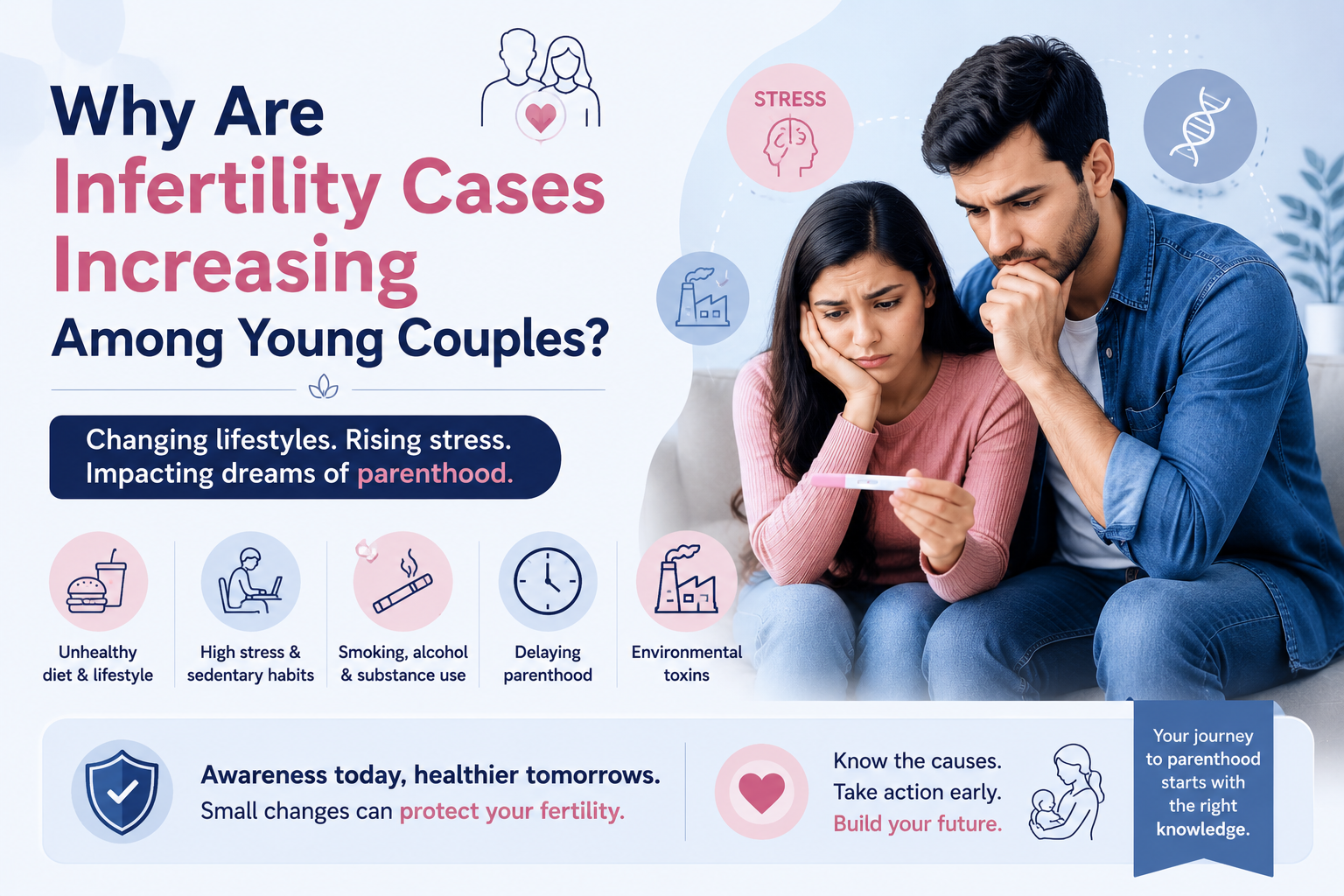
During the past decades, infertility has becoming a growing health problem among the young couple. Earlier we use to see that only those age old people faces with the problem of infertility. But, now it seems to be a big deal of young generation as they start experiencing infertility more often. Infertility can happen due to several issues such as changes in life style, increased amount of stress in life, and delays in planning a family, exposure to environmental factors and many more.

Infertility, in broad terms, indicates a situation where pregnancy does not happen within a period of one year for couples engaging in unprotected intercourse. For women older than 35, this timeframe extends to six months.

Delayed Parenthood

One of the major reasons for increasing infertility is delayed parenthood. Due to increase number of career focused young generation and having certain career goals like education or finance related goals before marriage is the main reason for delay parenthood. With the age the chances of getting pregnant gradually decreases, specifically for females. 

While this decision offers several advantages, fertility naturally declines with age, especially in women. Egg quality and quantity decrease over time, making conception more challenging. Male fertility also declines gradually with age, affecting sperm quality and motility.

Stress and Mental Pressure

Modern life often comes with constant pressure, demanding careers, financial responsibilities, and emotional stress. Chronic stress can interfere with hormonal balance, affect ovulation in women, and reduce sperm quality in men. Stress also impacts sleep, eating habits, and overall health, all of which play a role in fertility.

Unhealthy Lifestyle Habits

Eating habits (poor diet), inactivity, overweight, use of cigarettes, consumption of too much of alcohol, improper sleep are one of those activities which may cause a problem in fertility and Reproductive Health Problems . Also processed and sugar-rich food increases risk factors like Polycystic Ovarian Syndrome, hormone imbalance in females. Eating healthy foods can boost your Fertility level in both men & women.

Diet rich in processed foods and sugar, along with a sedentary lifestyle can also lead to hormonal imbalance and reproductive issues such as PCOS.  Living a healthy life can help increase fertility levels in both males and females.

Rising Cases of PCOS and Hormonal Disorders

Conditions like Polycystic Ovary Syndrome are becoming more common among young women. PCOS can cause irregular periods, ovulation issues, and difficulty conceiving.

Thyroid disorders, endometriosis, and hormonal imbalances also contribute significantly to infertility.

Environmental Factors

There is a possibility that contact with endocrine disruptors such as pollution, specific chemicals may have a direct effect on a person’s fertility. Harmful elements will affect hormones and eggs and sperms. Today’s lifestyle is full of such risk factors because of modern food packaging and plastic use.

Male Infertility Is Also Rising

Infertility is not the problem of women alone. It has been estimated that around 45% of all cases of infertility are caused due to male factors. These include low sperm count, motility, abnormal sperm morphology, and various lifestyle diseases. It clearly indicates the need for evaluating both partners for their fertility problems.

Final Thoughts

Infertility among young couples is affected by a number of causes ranging from physiological to lifestyle and environmental causes. The upside of all this is the fact that awareness about these causes will go a long way in improving one’s fertility status.

At Revyve Fertility, we know what you are going through when you seek to improve your chances of becoming parents. With proper help and treatment, having babies becomes much more realistic.

Blog

Unexplained Infertility: Why Everything Looks Normal but Pregnancy Doesn’t Happen


For many couples trying to conceive, one of the most frustrating things to hear is,

“Everything looks normal.”

At first, those words can feel reassuring. Normal reports should mean good news, right? But when months pass and pregnancy still doesn’t happen, that reassurance slowly turns into confusion, frustration, and emotional exhaustion.

You begin asking yourself difficult questions.

  • If all the tests are normal, then what’s going wrong?
  • What is the cause for the inability to conceive?

This is the dilemma that faces you when faced with unexplained infertility, one of the most difficult journeys that you may undertake in relation to fertility. At Revyve Fertility, we understand just how hard this journey can be. In many ways, it is better to have an answer rather than no answer at all.

What is Unexplained Infertility?

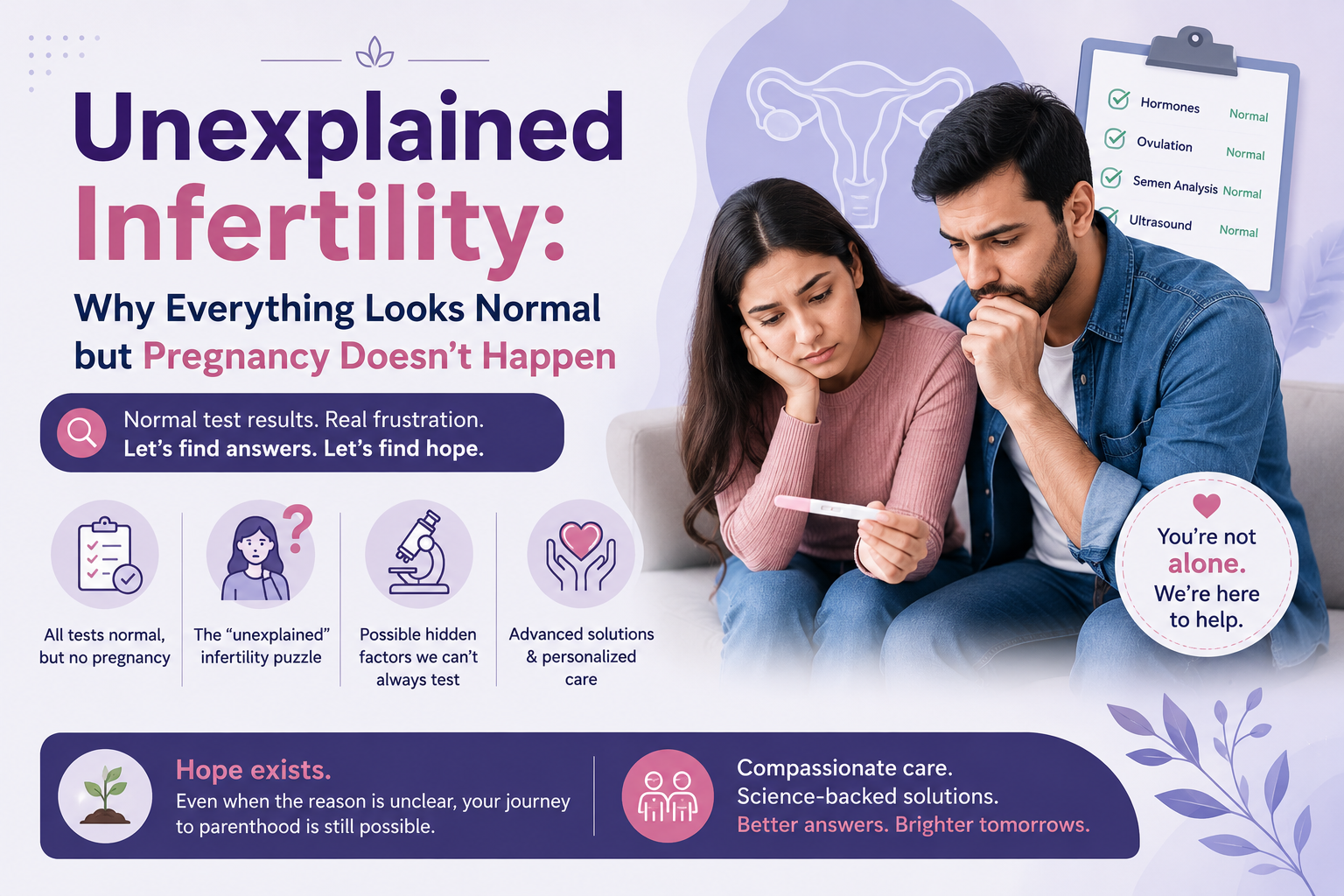
Unexplained infertility means that your inability to conceive does not have a clear cause identified by fertility tests.

Usually, doctors evaluate some important factors:

  • Are you ovulating regularly?
  • Are the fallopian tubes open?
  • Is the uterus healthy?
  • Is sperm count and quality normal?

When all these results look normal and pregnancy still doesn’t happen, unexplained infertility may be the diagnosis.

But here’s something important to understand:

This doesn’t mean nothing is wrong. It simply means the reason may be too subtle or complex to be detected through standard testing.


Fertility is More Complex Than It Looks

Pregnancy may seem straightforward, but biologically, it’s a very delicate process. There are just so many things that have to take place precisely when they should. There is the issue of the egg developing correctly, there has to be ovulation, sperm has to reach the egg, fertilization needs to take place, and finally there has to be successful implantation. Any kind of interference at all with any one of those processes will influence conception.

The problem could even be associated with something that is hard to identify through standard testing, like hormonal problems, egg quality issues, implantation problems, or even mild endometriosis.

Other times, despite the seeming good nature of the test results, the egg quality will start to drop off.

The Emotional Struggle of Unexplained Infertility

This is usually the hardest part. When there is no clear answer, it means that there is nowhere for the couple to go but into the unknown. They have nowhere specific to focus their efforts because the problem itself does not exist. Being unsure can weigh very heavily on someone.

It may leave you thinking too much about everything and second-guessing yourself.

There is Still Hope

The best part about unexplained infertility is that it doesn’t necessarily mean you won’t conceive ever again.

There are plenty of people who deal with unexplained infertility and end up conceiving anyway – some naturally and others thanks to appropriate fertility assistance. Some couples may be able to conceive through some lifestyle adjustments, whereas others will require assisted conception techniques such as follicle tracking, fertility drugs, intrauterine insemination, and in-vitro fertilization.

It depends on individual factors such as age and health.

Here at Revyve Fertility, we strongly believe that fertility assistance is highly personal. Each person goes through his or her own unique experience and should receive appropriate treatment accordingly. Lack of answers shouldn’t prevent anyone from making the next step.

Blog

Male Infertility: The Hidden Reason Behind 50 Percent of Infertility Cases

In case there are difficulties with conception, one of the first questions which arises in society is, “What is wrong with the woman?”

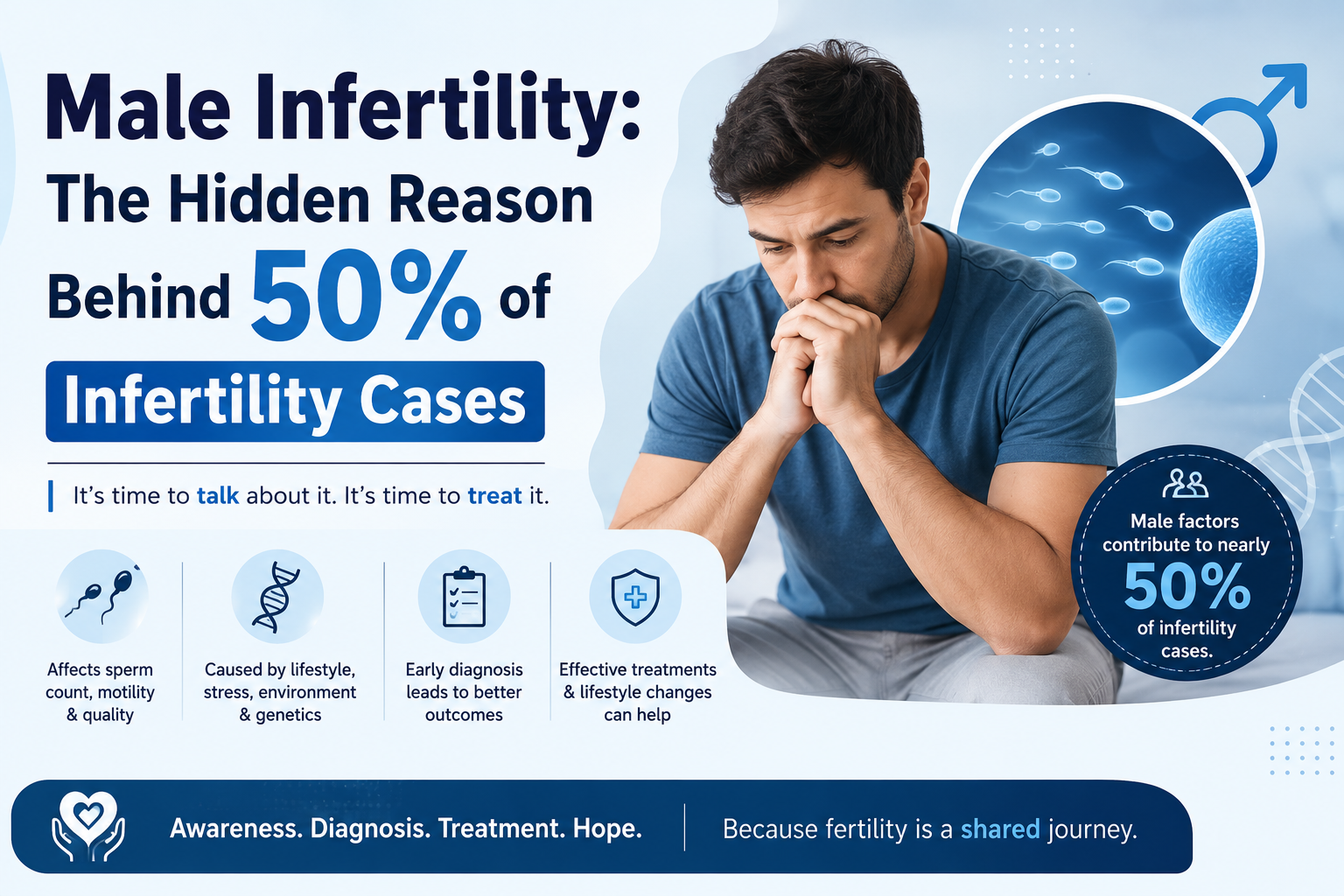
And here is a fact which is surprising for a lot of people: the problem with male infertility causes almost 50% of infertility problems. Yes, being infertile is not only a women’s health issue. Male fertility plays an important role as well. Unfortunately, male infertility remains a taboo subject. Men are hesitant to talk about their fertility challenges, get tested, or even consider that their infertility might lead to problems.

Here at Revyve Fertility, we are convinced that this approach should be changed with the help of increased awareness.

Understanding Male Infertility

Infertility in men basically implies that there may be some problems with their ability to contribute to conception because of problems with sperm production, quality, or delivery of sperms.

In order to achieve natural conception, sperms should be healthy, be produced in appropriate quantities, and be capable of reaching the egg and fertilizing it. If any of these factors be influenced, the possibility of conception will decrease.

It is crucial to point out that there can be no evident symptoms for infertility. In many cases, it becomes known only after a couple fails to conceive for some time.

Why Can Men Be Infertile?

The exact cause is not always one. Sometimes it involves a few different aspects. One of the main reasons for male infertility is low sperm count. It means less possibility of fertilization.

In other cases, sperm may be present but may not move properly. This is called poor sperm motility. Since sperm need to swim to reach the egg, movement plays a major role. Sperm shape also matters. Abnormal sperm morphology can affect the sperm’s ability to fertilize an egg. Apart from these, hormonal imbalances can interfere with sperm production. Varicocele, infection, diabetes, and genetics can have an effect on fertility.

Lifestyle habits have more influence than many men think.  Sperm health can be adversely affected by smoking, binge drinking, sleep deprivation, long-term stress, obesity, and bad eating habits. Modern life can quietly affect fertility in ways many men don’t expect.

When Should You Seek Help?

Many men think that if they feel healthy, fertility should not be a problem at all. But many times, fertility issues are silent issues.

If you have been having difficulty conceiving for over a year now, then it is high time that you consider getting a fertility consultation. This will help you save precious time and avoid stress.

The Good News: Treatment is Possible

Another myth concerning male infertility is that nothing can be done. This myth couldn’t be further from the truth. Luckily, there are numerous causes of male infertility that can be successfully treated. First, sometimes all you need to do to boost sperm production is make some basic lifestyle adjustments – improve your diet, exercise regularly, reduce stress and get enough sleep. For others, medication or hormone therapy might be helpful, while for some men a relatively minor surgery will make a difference.  Moreover, more advanced treatments such as IUI, IVF, and ICSI have made wonders for many couples.

Breaking the Silence

Fertility can be very stressful for many people, but it should not be made worse by any blame or silence. Fertility is a process that concerns both individuals and requires equal consideration from both sides. As professionals at Revyve Fertility, we strive to help our patients open up about their fertility and take appropriate action early on. In many cases, the first thing one needs to do is begin the discussion. And that discussion can make all the difference.

Blog

15 Early Signs You Should Get a Fertility Test

Getting into parenthood is a wonderful experience, but for some couples, conceiving can be tougher than they think. Although occasional delay is not necessarily something to worry about, some early signs may tell whether professional help is needed. Identifying these early signs can help detect any fertility issues early on and increase the possibility of success through treatment. Fertility problems can occur to both male or female, and testing done earlier can give some answers. 

Here are 15 signs that show that you might need a fertility test.

1. You’ve Been Trying to Conceive Without Success

Fertility tests are advised for individuals below 35 years who have been trying for one year without conceiving or those above 35 years who have been trying for half a year.

2. Irregular Periods

Irregularity in your menstrual cycle may be an indicator of ovulation problems or hormonal disorders that can hinder conception.

3. Very Painful Periods

Very painful periods may be a sign of disorders such as endometriosis, which affect fertility.

4. No Periods at All

Absence of periods may be a sign of hormonal or ovulation problems.

5. Heavy or Abnormal Bleeding

Changes in menstrual flow may point to reproductive health concerns.

6. History of Miscarriage

Repeated pregnancy loss may warrant further fertility investigation.

7. Above Age 35

Fertility decreases with age, particularly for females.

8. Previously Diagnosed Conditions

Polycystic Ovary Syndrome (PCOS), thyroid disease, or diabetes may be factors affecting one’s ability to conceive.

9. Pelvic Discomfort

Chronic pelvic discomfort might indicate some problems with the reproductive system.

10. Low Libido/Signs of Hormonal Imbalance

Imbalances in hormones affect fertility as well as sexuality.

11. Previous Pelvic Surgery

Past surgeries may sometimes impact reproductive organs.

12. Fertility Problems in Males

Sperm problems such as low number, motility issues, and/or erectile dysfunction could pose problems with conception.

13. Risk Factors Relating to Lifestyle Choices

Smoking, excessive alcohol consumption, dietary problems, overweight, and chronic stress might interfere with fertility.

14. Family History of Fertility Problems

This might be linked to genetics and/or heredity.

15. Unknown Fertility Problem

In some cases, it appears that there is nothing wrong but conception does not occur.

When Should You Take Action?

Unfortunately, too many couples put off getting the help they need, thinking that conception will ultimately occur on its own. However, fertility testing is not only about treatment; it is all about knowing your body and the possible problems that may come up.

It is also important to note that many fertility problems can be solved using the proper diagnosis and treatment methods.

Here at Revyve Fertility, we believe that early awareness can make a real difference. If you experience any of these symptoms, visiting a fertility specialist is highly recommended.